If you’re searching for an American Bully puppy, two terms you’re likely to encounter frequently are Micro Bully and Pocket Bully.
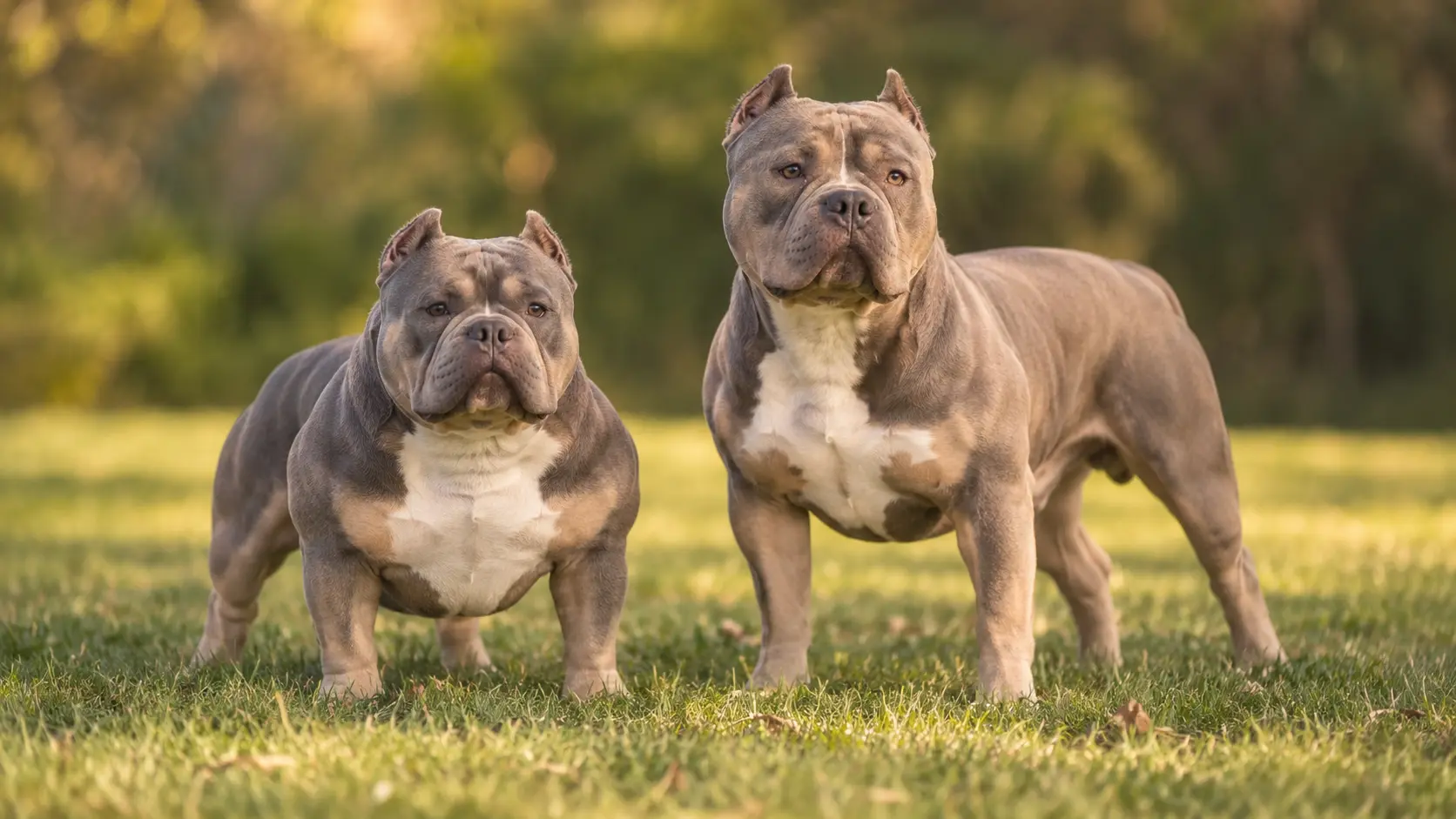
At first glance, the difference may seem simple: Micro Bullies are generally smaller, while Pocket Bullies are somewhat taller.
But buyers should look beyond height.
Size, proportions, structure, pedigree, health, temperament, activity level, breeder practices, and the individual puppy all matter when deciding which dog may be the better fit for your household.
There is another important distinction buyers should understand from the beginning:
Pocket is a recognized American Bully size variety under the American Bully Kennel Club (ABKC) standard, while “Micro Bully” is a commonly used breeder and marketplace term rather than an official ABKC size variety.
That doesn’t make the term Micro Bully meaningless. It means buyers should avoid relying on the label alone and instead evaluate the actual dog, its parents, pedigree, structure, health information, and breeder.
This guide compares Micro Bully vs Pocket Bully puppies to help you understand those differences before choosing.
Micro Bully vs Pocket Bully at a Glance
| Feature | Micro Bully | Pocket Bully |
|---|---|---|
| General size | Typically very short and compact | Small, compact American Bully |
| Official ABKC variety | No | Yes |
| Adult height | No universal official Micro standard | ABKC Pocket height ranges apply |
| Build | Often extremely compact, heavy-bodied | Compact, muscular and proportionate |
| Temperament | Depends heavily on genetics and upbringing | Depends heavily on genetics and upbringing |
| Exercise | Individual needs vary | Individual needs vary |
| Health considerations | Structure and degree of exaggeration deserve careful evaluation | Structure and health still require careful evaluation |
| Best choice | Depends on the individual dog and buyer | Depends on the individual dog and buyer |
The biggest mistake would be choosing solely from this table.
There can be substantial variation within both groups.
Let’s look at the differences more carefully.
What Is a Pocket Bully?
The Pocket Bully is a recognized size variety of the American Bully.
Despite the word “Pocket,” these aren’t miniature toy dogs.
They retain the muscular build and substantial appearance associated with the American Bully but stand shorter than Standard American Bullies.
Under the ABKC breed standard, adult Pocket males are generally 14 to under 17 inches at the withers, while adult females are generally 13 to under 16 inches.
Height is only one part of the picture.
A well-proportioned Pocket Bully should still present the overall characteristics of an American Bully rather than simply being a short dog.
For a puppy buyer, that distinction matters.
A breeder calling a puppy “Pocket” should be able to discuss:
The sire’s height
The dam’s height
Their overall structure
The puppy’s pedigree
Previous productions when available
Why the breeder expects the puppy to develop as a Pocket
No breeder can guarantee an exact adult measurement for a young puppy, but information about the parents and pedigree can help buyers form reasonable expectations.
What Is a Micro Bully?
The term Micro Bully is widely used for American Bully-type dogs bred for a particularly short, compact appearance.
Micro Bullies are often shorter than Pocket Bullies and may display:
Very short stature
Compact proportions
Heavy bone
Broad chest
Muscular build
Large or blocky head
Substantial appearance despite small height
However, buyers need to understand an important point:
There Is No Universal Official Micro Bully Size Standard
“Micro” is not an official ABKC American Bully size variety.
That means two breeders can use the term Micro Bully somewhat differently.
One breeder may describe a 12-inch adult as Micro, while another may apply the term based on pedigree, family traits, proportions, or their own breeding program.
This makes due diligence particularly important.
Instead of asking only:
“Is this puppy a Micro?”
Ask:
“How tall are the sire and dam, and what sizes have dogs from these bloodlines typically matured to?”
That gives you considerably more useful information.
Micro Bully vs Pocket Bully Size
Size is the most obvious difference buyers expect between these dogs.
Pocket Bullies have an established height range under the ABKC standard.
Micro Bullies don’t have one universally accepted official height range.
In practice, breeders generally use Micro to describe dogs bred smaller and shorter than the conventional Pocket range.
But a puppy’s future adult size can’t be predicted with absolute certainty.
Factors affecting adult size include:
Genetics
Sire size
Dam size
Extended pedigree
Sex
Development
Nutrition
Overall health
If adult size matters greatly to you, don’t purchase based solely on the puppy’s current size.
A very small eight-week-old puppy doesn’t automatically become the smallest adult in the litter.
Ask about the family behind the puppy.
Why Parent Size Matters
When comparing Micro and Pocket Bully puppies, look closely at the sire and dam.
Ask the breeder for their actual measurements.
For example:
Sire
Height
Weight
Age
Bully type
Photos
Pedigree
Dam
Height
Weight
Age
Bully type
Photos
Pedigree
Then ask whether the breeder has produced puppies from these dogs or related bloodlines previously.
Mature offspring can sometimes provide additional context about how a family of dogs develops.
Again, none of this guarantees a puppy’s final dimensions.
It gives you more information than a label alone.
Micro Bully vs Pocket Bully Structure
This is where buyers should look beyond size.
A shorter dog isn’t automatically a better Micro Bully.
A larger dog isn’t automatically a better Pocket Bully.
Structure and function matter.
When evaluating either type, consider the entire dog:
Overall balance
Front assembly
Rear assembly
Topline
Feet
Pasterns
Chest
Proportions
Movement
Ability to move comfortably
Ability to breathe comfortably
Extreme physical features can attract attention in photographs, but buyers should consider how those features affect the dog’s everyday function.
A dog still needs to walk, play, exercise, breathe, rest, and move through daily life comfortably.
Compact Is Not the Same as Exaggerated
This distinction is especially important when shopping for a Micro Bully.
A compact dog can have:
Short stature
Heavy bone
Broad appearance
Muscular development
Strong breed character
without every feature needing to be pushed to an extreme.
Buyers should be cautious about assuming that shorter, wider, heavier, or more exaggerated automatically means better.
Look at the entire dog.
Ask to see the parents standing naturally.
If possible, watch video of them moving rather than relying exclusively on posed photographs.
Movement can reveal things a stacked photograph doesn’t.
Micro Bully vs Pocket Bully Temperament
Size doesn’t determine personality.
Both Micro and Pocket Bullies can display the companion-oriented characteristics buyers often seek in American Bullies, but temperament varies among individual dogs.
Genetics, early environment, socialization, training, household experiences, and owner management all contribute.
When talking with a breeder, ask:
What is the sire’s temperament?
What is the dam’s temperament?
How do they behave around unfamiliar people?
How do they behave in the home?
How does the puppy interact with people?
How does the puppy interact with littermates?
Is the puppy particularly active, confident, reserved, or easygoing?
What early socialization has the litter received?
If you’re deciding between two puppies, these observations may be more useful than choosing based entirely on color or size.
Which Is Better With Families?
There isn’t a universal answer.
A dog’s suitability for a particular family depends on much more than whether someone calls it Micro or Pocket.
Consider:
Individual temperament
Training
Socialization
Energy level
Household routine
Children’s ages and behavior
Other pets
Owner experience
Ability to supervise interactions
Both Micro and Pocket Bullies require responsible ownership and appropriate training.
Children should also be taught how to interact appropriately with dogs, regardless of the dog’s size.
A shorter dog is still a strong dog.
Which Needs More Exercise?
Don’t assume that a smaller dog needs almost no exercise.
Both Micro and Pocket Bullies benefit from appropriate physical activity, mental stimulation, training, and interaction.
Exercise needs vary by dog.
Useful activities can include:
Walks
Age-appropriate play
Basic obedience
Enrichment activities
Interactive toys
Controlled social experiences
Short training sessions
The appropriate amount and intensity depend on age, health, structure, conditioning, environment, and veterinary guidance.
Puppies shouldn’t be exercised like mature adult dogs.
Their bodies are still developing.
Micro Bully vs Pocket Bully Health Considerations
Health should be a major part of your comparison.
Don’t assume one label automatically means healthy or unhealthy.
Instead, evaluate the individual puppy and the breeding behind it.
Ask about:
Sire health
Dam health
Genetic screening
Orthopedic evaluations where appropriate
Cardiac health
Eye health where appropriate
Known health history
Veterinary care
Puppy vaccinations
Deworming
Health records
Written health guarantee
Because Micro Bullies may be bred toward very compact proportions, buyers should pay particular attention to structure and function.
Ask yourself:
Does this dog simply look compact, or are physical exaggerations potentially affecting comfortable movement, breathing, or normal activity?
Health testing cannot guarantee a problem-free dog, but it can provide valuable information about the breeding program.
For a much deeper explanation, read American Bully Health Testing and Puppy Care Explained on Bully Puppy Market.
Ask to See the Dogs Move
Photographs are useful.
Video can tell you something different.
When evaluating either Micro or Pocket Bullies, ask for current video of the parents and puppy when practical.
Look at:
Walking
Turning
Playing
Standing naturally
General coordination
Comfort during movement
You’re not conducting a veterinary or professional structural examination from a video.
You’re simply gathering more information.
A puppy listing shouldn’t be evaluated entirely from one perfectly posed photograph.
Micro Bully vs Pocket Bully Care Needs
The everyday care requirements of Micro and Pocket Bullies overlap considerably.
Both need:
Appropriate nutrition
Routine veterinary care
Vaccination and parasite prevention
Dental care
Nail care
Grooming
Training
Socialization
Exercise
Mental enrichment
Weight management
A safe living environment
The individual dog’s needs matter more than the marketplace label.
Weight Management Matters
Maintaining an appropriate body condition is important for American Bullies.
Their naturally substantial appearance can sometimes make excess body weight harder for inexperienced owners to recognize.
Extra weight adds unnecessary stress to the body.
Ask your veterinarian to help you evaluate your dog’s body condition rather than relying solely on a target number on a scale.
A dog should not be deliberately overfed simply to create a heavier or more exaggerated appearance.
Feeding a Micro Bully vs Pocket Bully
There isn’t one special diet that every Micro Bully needs and another that every Pocket Bully needs.
Food should be appropriate for the individual dog’s:
Age
Size
Development
Activity
Body condition
Health needs
Puppies have different nutritional requirements from adult dogs.
When bringing home a puppy, ask the breeder:
What food is the puppy currently eating?
How much?
How often?
Has the puppy had digestive issues?
Should the same food be continued initially?
Abrupt food changes can cause digestive upset.
Discuss longer-term nutritional decisions with your veterinarian.
For new-owner education, feeding, training, puppy development, and everyday care, visit the American Bully Puppy Resource Center on AmericanBullyBreed.com.
Grooming Differences
Both typically have short coats that are relatively straightforward to maintain.
Routine care may include:
Brushing
Bathing when necessary
Nail trimming
Ear checks
Dental care
Skin monitoring
Individual skin sensitivities can occur, so ask whether the puppy or its family has a history of skin or allergy problems.
Coat color should never distract you from evaluating the puppy’s overall health.
Micro Bully vs Pocket Bully Lifespan
Buyers sometimes search for a precise lifespan difference between Micro and Pocket Bullies.
There isn’t a reliable single number that predicts how long an individual dog will live based simply on the Micro or Pocket label.
Longevity can be influenced by:
Genetics
Breeding practices
Structure
Congenital conditions
Body condition
Veterinary care
Nutrition
Exercise
Environment
Accidents and illness
A better buyer question is:
“What health and longevity information is available for this puppy’s family?”
Ask about parents, grandparents, previous offspring, and known health history where information is available.
Micro Bully vs Pocket Bully Price
Prices vary considerably.
A Micro Bully isn’t automatically more valuable because it’s smaller.
A Pocket Bully isn’t automatically less valuable because it’s taller.
Pricing can be influenced by:
Breeder
Individual puppy
Pedigree
Sire and dam
Bloodline
Structure
Color
Sex
Registration
Breeding rights
Health testing
Market demand
Proven productions
When comparing puppies, ask what the listed price includes.
That might involve:
Registration
Veterinary records
Vaccinations
Deworming
Health guarantee
Pedigree information
Transportation
Breeding rights
Don’t compare two prices until you understand what you’re actually comparing.
Read Pillar Link: How Much Does an American Bully Puppy Cost?
Micro Bully vs Pocket Bully Pedigree
Pedigree can be especially useful when you’re trying to understand what a puppy may develop into.
A pedigree can show the dogs behind the puppy and help a knowledgeable breeder explain characteristics seen within the family.
Ask:
Who are the sire and dam?
What dogs appear behind them?
What Bully types are represented?
What sizes were those dogs?
Are there mature offspring from related breedings?
Are certain dogs repeated in the pedigree?
What does the breeder know about health and temperament within the family?
A pedigree containing recognizable names isn’t automatically proof of quality.
Use pedigree as one source of information alongside health, structure, temperament, breeder practices, and the individual puppy.
Future Supporting Article Link: How to Read an American Bully Pedigree Before Buying a Puppy
Does Registration Matter?
Registration can document a dog’s recorded ancestry and provide access to registry services, depending on the organization.
But registration by itself doesn’t prove that a puppy is healthy, structurally sound, well raised, or appropriate for your household.
Ask:
Is the puppy registered or eligible for registration?
With which registry?
Will paperwork be included?
Is the puppy sold with full or limited registration?
Are breeding rights included?
If registration matters to you, get those answers before placing a deposit.
Choosing a Micro Bully Puppy
If you’re specifically interested in a Micro Bully, don’t make smallest puppy available your only criterion.
Evaluate:
The Parents
How large are they? How are they built? How do they move? What are their temperaments?
The Pedigree
What dogs are behind the puppy, and what does the breeder know about them?
Health
What health testing and veterinary information are available?
Structure
Does the breeding prioritize a compact appearance while maintaining comfortable function?
Temperament
Does the individual puppy appear compatible with what you’re looking for?
Breeder
Can the breeder explain the breeding and answer your questions?
Then consider appearance, color, and other preferences.
Choosing a Pocket Bully Puppy
The same principles apply when choosing a Pocket.
Ask about:
Parent heights
Parent weights
Structure
Movement
Temperament
Health testing
Pedigree
Previous productions
Puppy development
Registration
Don’t assume that every puppy advertised as Pocket will mature within a specific height simply because the listing uses that term.
Ask why the breeder expects the puppy to mature as a Pocket.
Micro Bully or Pocket Bully for a First-Time Owner?
Neither label automatically makes a dog better for a first-time owner.
A first-time owner should focus heavily on:
Stable temperament
Appropriate energy level
Good breeder communication
Early socialization
Trainability
Health
Manageable structure
Ongoing support
You also need realistic expectations about dog ownership.
Veterinary care, food, training, supplies, transportation, boarding, grooming, and emergencies all cost money.
The purchase price is only the beginning.
Which One Needs More Space?
A Micro or Pocket Bully may require less physical space than a much larger dog, but square footage isn’t the only consideration.
A dog’s quality of life depends on:
Exercise
Mental stimulation
Training
Interaction
Safe outdoor opportunities
Household routine
A dog can live successfully in a smaller home when its needs are consistently met.
A large yard doesn’t replace exercise, training, or human interaction.
Should Color Affect Your Decision?
Color is understandably part of what attracts many buyers to a particular puppy.
American Bullies can appear in many colors and patterns.
There’s nothing wrong with having an appearance preference.
But color should come after more important considerations.
A useful priority order is:
Health
Temperament
Structure and function
Breeder
Pedigree
Lifestyle compatibility
Individual puppy
Appearance preferences
Don’t buy the wrong puppy for your household simply because it’s the color you wanted.
Don’t Choose From Photos Alone
Online puppy shopping is highly visual.
That makes it easy to choose emotionally before you’ve gathered enough information.
Before reserving a puppy, ask for:
Current photos
Current video
Sire information
Dam information
Health information
Pedigree
Date of birth
Current weight if relevant
Breeder information
Registration information
Deposit terms
Health guarantee
Transportation information
The Questions to Ask Before Buying an American Bully Puppy guide on Bully Puppy Market provides a complete pre-purchase checklist.
Questions to Ask a Micro or Pocket Bully Breeder
Before choosing either type, ask:
About Size
How tall is the sire?
How tall is the dam?
What do they weigh?
What size do you expect this puppy to become?
What are mature dogs from this family typically like?
About Structure
Can I see natural standing photos?
Can I see the parents moving?
Have either parents had structural or mobility problems?
About Health
What health testing has been performed?
Are results available?
Has the puppy received veterinary care?
Is there a health guarantee?
About Temperament
What are the parents like?
How would you describe this puppy?
How has the puppy been socialized?
About Pedigree
Can I review the pedigree?
What bloodlines are represented?
Why was this breeding planned?
About the Purchase
What is the total price?
What does the deposit reserve?
Is registration included?
Are breeding rights included?
When can the puppy go home?
What transportation options are available?
The breeder’s willingness and ability to answer reasonable questions matters.
Red Flags When Comparing Micro and Pocket Bullies
Slow down and gather more information when a seller focuses almost entirely on:
Extreme size claims
“Guaranteed” adult measurements
Color alone
Head size alone
Width alone
Famous pedigree names without explaining the dogs
Pressure to send a deposit immediately
Also ask additional questions when health, parent information, veterinary care, registration, or purchase terms remain unclear.
Marketing language shouldn’t replace useful information.
Beware of Guaranteed Adult Size
This deserves special emphasis.
A breeder can make an informed estimate based on:
Parents
Pedigree
Previous productions
Current development
But puppies grow at different rates.
Be skeptical of absolute guarantees that a young puppy will mature to an exact height or weight.
If size is extremely important to you, an older puppy or adult dog provides more certainty than a very young puppy.
What About Exotic Bullies?
Buyers sometimes see Micro Bully and Exotic Bully used together or interchangeably.
They shouldn’t automatically be treated as identical terms.
Breeders and registries may use terminology differently, and dogs advertised under these labels can vary considerably.
Rather than relying on the label, ask:
What registry is the dog associated with?
How does the breeder classify the dog?
What are the parents?
What does the pedigree show?
What characteristics is the breeder selecting for?
Future Supporting Article Link: Micro Bully vs Exotic Bully: What’s the Difference?
Micro Bully vs Pocket Bully: How to Decide
Instead of asking which type is universally “better,” ask which individual dog and breeder better match what you’re looking for.
A Micro Bully May Appeal to Buyers Who:
Prefer a very short, compact appearance
Understand that Micro isn’t an official ABKC size class
Are willing to carefully evaluate structure and health
Have researched the breeder and pedigree
Prefer the look associated with Micro Bully breeding programs
A Pocket Bully May Appeal to Buyers Who:
Want a smaller recognized American Bully variety
Prefer the Pocket height range
Want a compact but somewhat taller American Bully
Are interested in ABKC size classification
Prefer the structure and appearance of a particular Pocket breeding program
Neither list determines what you should buy.
The individual dog matters more than the label.
Compare the Breeding, Not Just the Category
Imagine you’re comparing two puppies.
Puppy A
Advertised as a Micro Bully with beautiful photos and a desirable color, but little information is available about the parents, health testing, pedigree, or breeder.
Puppy B
Advertised as a Pocket Bully with detailed sire and dam information, pedigree, health records, breeder information, current video, and clear purchase terms.
It wouldn’t make sense to choose Puppy A automatically simply because you originally searched for “Micro Bully.”
Now reverse the example.
If the Micro puppy comes from a breeder who provides detailed health, pedigree, parent, temperament, and puppy information, while the Pocket listing provides almost nothing, the label “Pocket” shouldn’t automatically determine your choice either.
Evaluate the complete breeding.
How Bully Puppy Market Helps Buyers Compare
Bully Puppy Market was created to make it easier to research American Bully puppies and the breeders behind them.
Rather than evaluating a puppy from one social-media photograph, buyers can review structured listing information and breeder profiles.
Depending on the information provided for a listing, you may be able to review:
Bully type
Sex
Price
Location
Date of birth
Sire
Dam
Bloodline or pedigree information
Registry
Health information
Health guarantee information
Transportation options
Breeder profile
This makes it easier to compare puppies using more than appearance alone.
Browse available Micro and Pocket Bully puppies on Bully Puppy Market.
You can also Find American Bully Breeders and learn about individual breeding programs before choosing a puppy.
Micro Bully vs Pocket Bully Buyer Checklist
Before making your decision, compare:
Size
☐ Sire height
☐ Dam height
☐ Sire weight
☐ Dam weight
☐ Expected adult range discussed
Structure
☐ Current puppy photos
☐ Parent photos
☐ Movement video when available
☐ Overall proportions considered
Health
☐ Parent health information
☐ Health-testing results discussed
☐ Puppy veterinary records
☐ Vaccination/deworming history
☐ Health guarantee reviewed
Temperament
☐ Sire temperament
☐ Dam temperament
☐ Puppy behavior
☐ Early socialization
Pedigree
☐ Sire and dam identified
☐ Pedigree reviewed
☐ Bloodlines understood
☐ Breeding purpose explained
Purchase
☐ Total price
☐ Deposit terms
☐ Registration
☐ Breeding rights if applicable
☐ Pickup or transportation
☐ Written agreements
If one puppy gives you considerably less information than another, ask why before making your decision.
Frequently Asked Questions
What is the main difference between a Micro Bully and a Pocket Bully?
The most obvious difference is generally size. Pocket is an officially recognized ABKC American Bully size variety with established height ranges. Micro Bully is a commonly used term for especially short, compact Bully-type dogs but isn’t an official ABKC size variety.
Is a Micro Bully smaller than a Pocket Bully?
Micro Bullies are generally bred to be shorter and more compact than Pocket Bullies, but there is no universal official Micro height standard. Ask for actual parent measurements instead of relying exclusively on the label.
Is a Pocket Bully a small American Bully?
Yes. Pocket is the smallest height variety recognized in the ABKC American Bully standard, although these dogs can still have substantial, muscular builds.
Is Micro Bully an official American Bully class?
Not under the ABKC American Bully standard. Buyers may still encounter Micro widely as a breeder and marketplace term.
Are Micro Bullies good family dogs?
Individual temperament, breeding, socialization, training, health, and household compatibility matter more than the Micro label. Evaluate the puppy and parents individually.
Are Pocket Bullies good family dogs?
Pocket Bullies can be companion dogs, but suitability depends on the individual dog’s temperament, socialization, training, health, and the household.
Which costs more, a Micro Bully or Pocket Bully?
There is no universal rule. Pricing varies by breeder, puppy, pedigree, structure, color, registration, breeding rights, demand, and other factors.
Which is healthier, a Micro Bully or Pocket Bully?
A label alone can’t determine the health of an individual dog. Evaluate parent health, health testing, structure, veterinary information, pedigree, and breeding practices.
How big will my Micro Bully puppy get?
No breeder can predict a young puppy’s exact adult dimensions with certainty. Parent size, pedigree, previous productions, sex, development, nutrition, and health can provide useful context.
How can I find Micro or Pocket Bully puppies for sale?
Start by comparing puppies and breeders rather than responding to the first advertisement you see. Review breeder information, parent information, health details, pedigree, purchase terms, and current puppy information before placing a deposit.
The Better Question: Which Individual Puppy Is Right for You?
Micro vs Pocket is a useful starting point.
It shouldn’t be the entire decision.
Two Micro Bullies can differ considerably from each other.
Two Pocket Bullies can too.
And a well-bred individual puppy that suits your household may ultimately be a better choice than another puppy carrying the label you originally intended to buy.
Consider:
Health.
Structure.
Temperament.
Pedigree.
Parents.
Breeder.
Lifestyle compatibility.
Then consider size, color, and appearance.
The goal isn’t simply to find the smallest American Bully or the most impressive photograph.
It’s to make an informed choice about the dog you’ll potentially share your life with for many years.
Continue Your Puppy Search
Ready to compare available puppies?
Browse American Bully Puppies on Bully Puppy Market
Want to research the people behind the puppies?
Before reserving any puppy, continue with:
Questions to Ask Before Buying an American Bully Puppy
American Bully Health Testing and Puppy Care Explained
How to Find a Responsible American Bully Breeder
How Much Does an American Bully Puppy Cost?
American Bully Puppies for Sale: Complete Buyer’s Guide
For training, feeding, puppy development, and everyday American Bully ownership information, continue your research at the American Bully Puppy Resource Center.
Always review breeder information, puppy health details, documentation, and marketplace policies before making a reservation decision.